Complete SEO Course (3 Hours): Rank Higher in AI Search & Google Results (With Prompts)
عدد الدروس : 1 عدد ساعات الدورة : 03:19:42 شهادة معتمدة : نعم التسجيل في الدورة للحصول على شهادةللحصول على شهادة
- 1- التسجيل
- 2- مشاهدة الكورس كاملا
- 3- متابعة نسبة اكتمال الكورس تدريجيا
- 4- بعد الانتهاء تظهر الشهادة في الملف الشخصي الخاص بك
عن الدورة
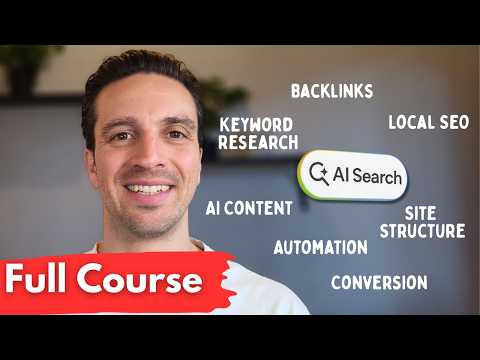
SEO is evolving beyond traditional search engines, now including AI-powered search systems and generative results that prioritize context, intent, and content quality. In this series, viewers learn a complete modern SEO system designed to help websites and content rank both on Google and in AI-driven search environments.
The content begins by explaining how search has changed in recent years. Instead of only relying on keyword matching, search engines and AI systems now focus heavily on meaning, relevance, and user intent. This means content must be structured in a way that clearly answers questions and provides complete, valuable information.
A major focus throughout the series is keyword research and intent mapping. Keywords are still important, but understanding the reason behind a search query is even more critical. The series explains how to identify informational, transactional, and navigational intent and how to create content that aligns with each type.
The series also explores on-page SEO and content structuring. Proper formatting, clear headings, internal linking, and optimized content flow help both search engines and AI systems understand and extract information more effectively. Well-structured content improves readability and ranking potential across platforms.
Another important topic covered is AI search optimization. This includes creating content that is easy for AI systems to interpret, summarize, and recommend. Clear explanations, direct answers, and structured formatting increase the chances of appearing in AI-generated responses and search overviews.
The content also highlights the role of prompts and AI tools in modern SEO workflows. Prompts can be used to generate keyword ideas, content outlines, blog structures, and optimization suggestions. When used correctly, AI tools can significantly speed up content creation while maintaining quality and consistency.
The series further explains content creation strategies for ranking. High-quality content must be detailed, relevant, and helpful. It should cover topics deeply rather than superficially, ensuring users find complete answers without needing to search elsewhere.
Technical SEO is also included, focusing on website performance, indexing, mobile optimization, and structured data. These elements ensure that websites are accessible, fast, and easy for search engines and AI systems to process.


