Hard Surface Weight Painting in Blender | Clean Mechanical Rigging Setup
عدد الدروس : 1 عدد ساعات الدورة : 00:30:12 شهادة معتمدة : نعم التسجيل في الدورة للحصول على شهادةللحصول على شهادة
- 1- التسجيل
- 2- مشاهدة الكورس كاملا
- 3- متابعة نسبة اكتمال الكورس تدريجيا
- 4- بعد الانتهاء تظهر الشهادة في الملف الشخصي الخاص بك
قائمة الدروس
عن الدورة
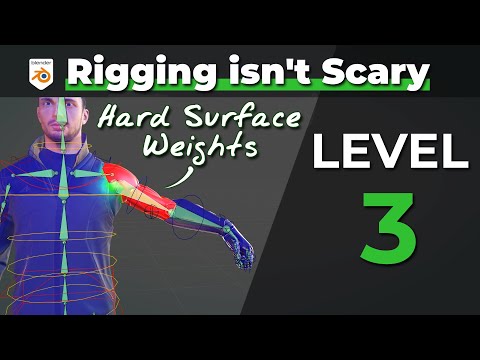
This rigging lesson focuses on hard-surface weight painting, a specialized workflow used for mechanical objects, robots, armor pieces, and rigid structures inside Blender. Unlike organic character deformation, hard-surface rigging requires precise and controlled movement without soft bending or stretching.
The lesson begins by explaining the difference between organic and hard-surface weighting. Organic characters rely on smooth deformation between joints, while hard-surface objects are usually rigid and should maintain their shape during movement. This means weight painting for hard surfaces is often cleaner, sharper, and more controlled.
You start by organizing the mesh into logical sections based on how the object is supposed to move. Mechanical parts such as armor plates, robotic limbs, or machinery components are usually separated into distinct pieces so they can rotate or move independently without deformation.
A key principle introduced is rigid weighting. Instead of blending weights smoothly across multiple bones, many hard-surface parts are assigned almost entirely to a single bone. This keeps the geometry solid and prevents unwanted bending that would break the mechanical appearance.
The lesson also covers parenting and bone influence setup. Each rigid section is connected to the correct bone so that movement behaves predictably. For example, a robotic forearm should follow the forearm bone completely while remaining unaffected by nearby joints.
Weight painting tools are still important, but they are used differently compared to organic workflows. Instead of soft gradients, you often use stronger and more direct assignments to create crisp deformation boundaries between moving parts.
You also learn how to handle joints where hard-surface parts connect. Some mechanical setups require overlapping geometry or separated panels to hide gaps during movement. Proper planning of these intersections helps maintain realism and clean motion.
Another important focus is testing articulation and rotation. Mechanical rigs often involve precise movement, so rotating joints through their full range of motion helps identify clipping, stretching, or intersection problems early.


