Complete Beginner’s Guide to Sculpting in Blender 4.4 | Full Digital Sculpting Workflow
عدد الدروس : 1 عدد ساعات الدورة : 00:37:04 شهادة معتمدة : نعم التسجيل في الدورة للحصول على شهادةللحصول على شهادة
- 1- التسجيل
- 2- مشاهدة الكورس كاملا
- 3- متابعة نسبة اكتمال الكورس تدريجيا
- 4- بعد الانتهاء تظهر الشهادة في الملف الشخصي الخاص بك
عن الدورة
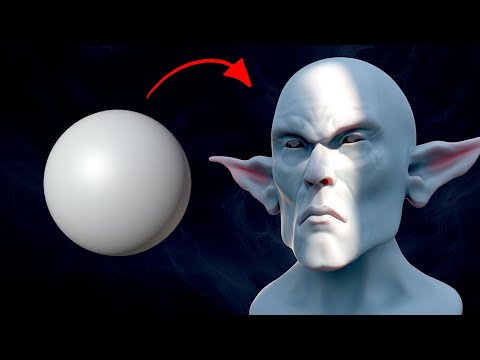
This complete beginner’s guide to sculpting in Blender 4.4 introduces you to one of the most creative and artistic parts of 3D modeling. Unlike traditional polygon modeling, sculpting focuses on shaping digital objects in a more natural and intuitive way, similar to working with clay. This makes it especially powerful for creating characters, creatures, and organic forms.
The journey begins with understanding the sculpting workspace in Blender and how it differs from standard modeling modes. Instead of manipulating vertices and edges directly, sculpting allows you to use brush-based tools to push, pull, smooth, and refine shapes. This approach gives you more freedom to explore ideas quickly without worrying about technical constraints in the early stages.
You are introduced to the core sculpting brushes, including tools for grabbing, smoothing, inflating, and carving. Each brush serves a specific purpose in shaping the model. For example, the grab brush helps establish large forms and proportions, while the smooth brush refines surfaces and removes unwanted bumps. Learning how and when to use each brush is essential for building control and consistency in your sculpting workflow.
A major focus of this guide is the blockout stage, where you start with simple shapes and gradually build them into recognizable forms. This stage is all about proportions, silhouette, and overall structure rather than fine details. Strong blockouts are the foundation of successful sculpts, whether you are creating a character, animal, or stylized object.
As the sculpt develops, you begin refining anatomy and structure. For character work, this includes understanding basic proportions of the head, facial features, and body structure. Even in stylized sculpting, correct proportions are important for creating appealing and believable designs.
You also explore different sculpting workflows such as dynamic topology, remeshing, and multiresolution sculpting. These methods help control mesh detail and resolution depending on the stage of your work. Knowing when to use each approach allows you to sculpt more efficiently and avoid technical issues as your model becomes more detailed.
Detailing techniques are introduced through the use of alphas, textures, and custom brushes. These tools allow you to add fine surface details like skin pores, fabric patterns, or surface imperfections without manually sculpting every small element. This helps speed up the workflow while maintaining high-quality results.


