Process Control & Dynamics in Chemical Engineering | Full Course
عدد الدروس : 21 عدد ساعات الدورة : 11:22:34 شهادة معتمدة : نعم التسجيل في الدورة للحصول على شهادةللحصول على شهادة
- 1- التسجيل
- 2- مشاهدة الكورس كاملا
- 3- متابعة نسبة اكتمال الكورس تدريجيا
- 4- بعد الانتهاء تظهر الشهادة في الملف الشخصي الخاص بك
قائمة الدروس
عن الدورة
This course provides a comprehensive introduction to process control and dynamics in chemical engineering. It is designed to help students understand how industrial processes are monitored, controlled, and optimized in real-world applications.
The course begins with the fundamentals of process control, explaining the importance of maintaining stable and efficient system performance. It introduces key concepts such as process variables, system behavior, and how different components interact within a process.
Learners will explore dynamic models that describe how systems change over time, along with energy balance concepts that are essential for analyzing process behavior. The course also covers deviation variables, which simplify the analysis of dynamic systems.
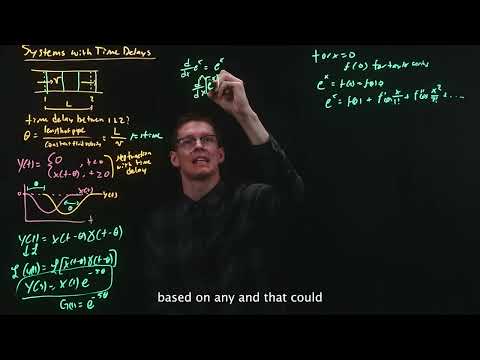
A major focus is on mathematical tools used in control engineering, including Laplace transforms and transfer functions. These tools help convert complex differential equations into simpler forms that are easier to analyze and control.
The course also introduces system linearization and higher-order systems, providing insight into how real industrial processes are approximated and controlled.
By the end of this course, learners will understand the core principles of process control and dynamics and be able to analyze and model engineering systems effectively.


