Muscle Physiology Series – Understanding Muscle Function and Contraction
عدد الدروس : 13 عدد ساعات الدورة : 05:37:26 شهادة معتمدة : نعم التسجيل في الدورة للحصول على شهادةللحصول على شهادة
- 1- التسجيل
- 2- مشاهدة الكورس كاملا
- 3- متابعة نسبة اكتمال الكورس تدريجيا
- 4- بعد الانتهاء تظهر الشهادة في الملف الشخصي الخاص بك
قائمة الدروس
عن الدورة
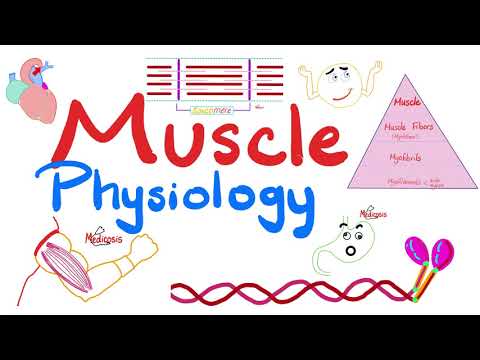
The Muscle Physiology Series provides a clear and structured explanation of how muscles function at the cellular and physiological levels. This course explores the mechanisms that allow muscles to contract, generate force, and produce movement within the human body. It is designed for students in health sciences, fitness professionals, and anyone interested in understanding muscle function in depth.
Participants will learn about the essential structures involved in muscle contraction, including the M line, sarcomeres, troponin, tropomyosin, T-tubules, and the sarcoplasmic reticulum. The course also explains the neuromuscular junction (NMJ), where nerve signals trigger muscle activity. These foundational concepts help learners understand how electrical signals are converted into mechanical movement through a process called excitation–contraction coupling.
The course also compares slow-twitch and fast-twitch muscle fibers and explains how they influence endurance, strength, and athletic performance. Additional topics include isometric and isotonic contractions, as well as important physiological principles like the length–tension relationship, load–velocity relationship, and the Frank–Starling law.
By the end of the series, learners will gain a deeper understanding of how muscles produce force, adapt to training, and support movement, making this c


