Improved Leg Rig in Blender | Advanced Character Rigging Setup
عدد الدروس : 1 عدد ساعات الدورة : 00:59:55 شهادة معتمدة : نعم التسجيل في الدورة للحصول على شهادةللحصول على شهادة
- 1- التسجيل
- 2- مشاهدة الكورس كاملا
- 3- متابعة نسبة اكتمال الكورس تدريجيا
- 4- بعد الانتهاء تظهر الشهادة في الملف الشخصي الخاص بك
قائمة الدروس
عن الدورة
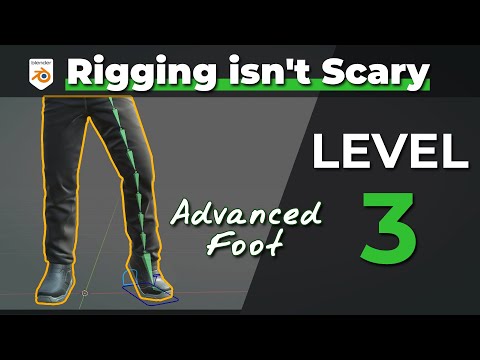
This rigging lesson focuses on improving a character’s leg setup to achieve more stable, realistic, and animation-friendly movement. The legs are one of the most important parts of a rig because they carry the entire body weight and are responsible for walking, running, and grounded motion. A poorly designed leg rig can easily break animation, so proper structure is essential.
The lesson begins by reviewing the basic leg bone structure, including the thigh, shin, and foot bones. Each bone must be placed carefully to match natural human anatomy. Proper alignment ensures that the leg bends correctly and avoids unnatural twisting or collapsing during animation.
A key improvement in this rig is the use of Inverse Kinematics (IK) for the legs. IK allows the animator to control the foot directly while the rest of the leg adjusts automatically. This makes walking and grounded movement much easier compared to manually rotating each bone using Forward Kinematics.
The setup includes an IK target and a pole target. The IK target controls where the foot goes, while the pole target defines the direction of the knee. Proper placement of the pole target is critical to prevent knee flipping or unstable bending during movement.
You also learn how to fine-tune the IK chain length so the correct bones are influenced by the IK system. Typically, the IK constraint is applied from the foot back up the leg chain, ensuring that the entire leg reacts naturally to movement.
An important part of the improvement process is correcting deformation issues. This includes checking how the mesh bends at the knee and ankle and adjusting bone placement or weight painting to ensure smooth deformation. Clean deformation is essential for professional-quality animation.
The lesson also emphasizes control and usability. A good leg rig is not only functional but also easy to animate. This includes organizing controls clearly, naming bones properly, and ensuring that the IK handles are easy to select and manipulate.
Testing plays a major role in this stage. Simple poses like walking, bending, and stretching are used to evaluate how the rig behaves under motion. Any issues such as stretching, flipping, or misalignment are corrected early in the setup process.
By the end of this lesson, you will understand how to build a more advanced and reliable leg rig in Blender using IK systems and proper anatomical structure. This forms a strong foundation for full-body rigging and character animation workflows


